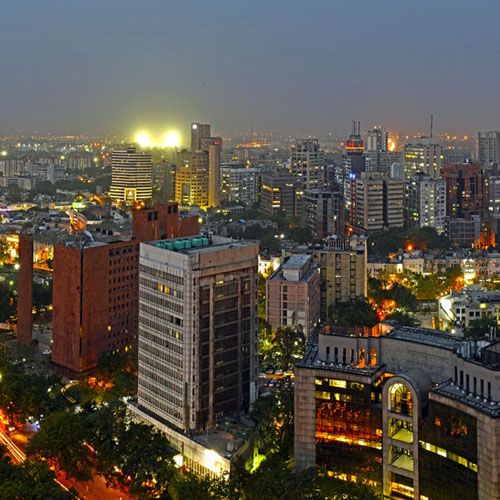
Commercial Property Investment Gurgaon: What Should Investors Check Before Buying?
Gurgaon has become an important business and commercial destination in the Delhi-NCR region, creating interest among investors exploring offices, retail spaces, commercial floors, and other income-generating properties.
For anyone considering Commercial Property Investment Gurgaon, the decision involves much more than comparing property prices. Location, tenant demand, accessibility, project quality, occupancy, lease terms, maintenance, and the overall financial structure can all influence the performance of a commercial property.
Commercial real estate can offer opportunities for rental income and long-term capital appreciation, but returns are not guaranteed. The right property depends on the investor's budget, investment horizon, risk tolerance, and objectives.
This guide explains the key factors investors should evaluate before buying commercial property in Gurgaon.
Why Consider Commercial Property Investment in Gurgaon?
Gurgaon has a diverse commercial ecosystem that includes corporate offices, retail destinations, business parks, mixed-use developments, and newer commercial corridors. This creates different types of opportunities for investors.
Depending on the location and project, investors may consider office spaces, retail shops, high-street commercial units, commercial floors, food and beverage spaces, mixed-use developments, and small and large-format commercial properties.
The suitability of each category depends on factors such as location, tenant profile, entry price, operating costs, and expected demand. Rather than choosing a property simply because it promises high returns, investors should first understand the underlying commercial demand.
1. Start With Your Investment Objective
Before looking at properties, decide what you want from the investment. Your objective may be regular rental income, long-term capital appreciation, a combination of rental income and appreciation, diversification of your property portfolio, or ownership of a commercial asset for future business use.
These objectives can lead to very different property choices. For example, an investor primarily seeking rental income may focus more heavily on current occupancy and tenant demand, while someone with a longer investment horizon may place greater emphasis on location development and future commercial activity.
Having a clear objective can make the property-selection process much easier.
2. Location Is One of the Most Important Factors
In commercial real estate, location can have a direct influence on visibility, accessibility, tenant demand, and customer footfall.
When evaluating commercial property in Gurgaon, consider its proximity to major roads, expressways, metro connectivity, corporate offices, residential communities, hotels, educational institutions, hospitals, airports, and other commercial hubs.
Don't evaluate a commercial property only by its distance from a major road. Check how easily customers, employees, tenants, and visitors can actually reach the property. Accessibility from surrounding residential and business catchments can be particularly important for retail and service-oriented businesses.
3. Understand the Type of Commercial Property
Not all commercial properties operate in the same way.
Office Space: Office properties depend heavily on business demand, accessibility, building infrastructure, parking, and tenant requirements.
Retail Space: Retail properties can be influenced by visibility, frontage, footfall, surrounding population, competition, and tenant mix.
High-Street Commercial: High-street locations may attract businesses that depend on visibility and walk-in customers.
Mixed-Use Development: Mixed-use projects can combine residential, retail, office, and lifestyle components, potentially creating an integrated customer and tenant ecosystem.
Before investing, understand how the particular commercial format generates demand.
4. Evaluate Existing and Potential Tenant Demand
A commercial property may look attractive on paper but still face challenges if there is insufficient tenant demand.
Research existing occupancy, nearby businesses, tenant categories, vacancy levels, local customer profile, nearby residential population, office population, competing developments, and historical rental activity, where reliable information is available.
For an under-construction project, distinguish between current occupancy and projected future demand. Future development can create opportunities, but projected demand should not be treated as guaranteed.
5. Check Footfall and Visibility for Retail
If you are considering a retail property, footfall and visibility deserve special attention. Ask where customers will enter, whether the unit is visible from the main road, whether there is sufficient pedestrian movement, where parking facilities are located, whether there are anchor businesses nearby, what type of customers live or work in the catchment, and whether the property is easily accessible.
A retail unit inside a large development may have a different demand profile from a shop located on a busy high street. The right location depends on the business category that the property is expected to attract.
6. For Office Space, Examine Business Accessibility
Businesses generally need convenient access for employees, clients, and visitors.
When evaluating Office Space on Dwarka Expressway or other Gurgaon commercial locations, consider road connectivity, public transport, parking, building access, lift capacity, power backup, internet infrastructure, security, common areas, and nearby food and convenience facilities.
The commercial environment should support the type of businesses expected to occupy the building.
7. Compare Carpet Area and Saleable Area
Just as with residential property, commercial properties may be marketed using different area measurements.
Before comparing prices, understand carpet area, built-up area, saleable area, common-area loading, and usable workspace.
A lower quoted price per square foot does not necessarily mean a lower overall cost if the usable area is significantly different. Always compare properties using comparable measurements.
8. Calculate the Complete Acquisition Cost
The advertised price should not be your only financial reference.
Depending on the property and transaction, additional costs may include the basic property price, parking, preferential location charges, maintenance deposits, club or facility charges, registration and stamp duty, applicable taxes, and other project-specific charges.
Ask for a complete cost sheet before making comparisons. This will give you a more realistic understanding of the capital required.
9. Study the Rental Economics
One of the major reasons investors explore commercial property is the possibility of rental income. However, don't calculate returns using an advertised rent alone.
Gross rental yield = Annual rental income ÷ Property acquisition cost × 100
For example, if a property costs ₹1 crore and generates ₹6 lakh in annual rent, the gross rental yield would be 6%. But this is only a simplified calculation.
Actual returns may be affected by vacancy periods, maintenance costs, property management expenses, taxes, brokerage, fit-out requirements, lease incentives, and tenant turnover. Therefore, investors should evaluate both gross and potential net income.
10. Understand the Lease Structure
If the property is already leased, examine the lease agreement carefully.
Important factors can include monthly rent, lease duration, lock-in period, security deposit, escalation clause, maintenance responsibility, renewal terms, exit conditions, and tenant obligations.
A property with an existing tenant may provide greater visibility into current rental income, but the quality and sustainability of that income still need to be assessed. For an investment property, don't look at rent without understanding the lease behind it.
11. Examine the Developer and Project
Developer reputation matters in commercial real estate as well.
Research previous commercial projects, delivery track record, construction quality, occupancy, maintenance standards, tenant profile, project management, and regulatory compliance.
For new developments, also check what stage the project is at and whether the expected commercial ecosystem is already established or still developing.
12. Consider the Surrounding Catchment
A commercial property doesn't operate in isolation. The surrounding catchment can influence its long-term demand.
Look at existing residential population, upcoming housing projects, corporate offices, schools and institutions, hotels, retail destinations, transportation infrastructure, and competing commercial developments.
This is particularly relevant when evaluating Commercial Projects on Dwarka Expressway, where different developments may be at different stages of commercial maturity.
A growing catchment can create opportunities, but investors should assess the actual development timeline rather than relying only on future projections.
13. Compare Established Areas With Emerging Corridors
Gurgaon offers both established commercial districts and developing corridors.
Visible Demand
- Existing businesses
- Stronger tenant demand
- Better-developed infrastructure
- Established customer catchments
Future Potential
- New commercial developments
- Potentially different entry prices
- Growing residential catchments
- Future infrastructure development
Established areas may provide greater visibility into current demand, while emerging areas require more attention to future development assumptions.
14. Don't Ignore Parking and Building Infrastructure
Commercial tenants and customers need convenient access.
Check parking availability, visitor parking, basement or surface parking, lift capacity, power backup, fire safety systems, security, air-conditioning provisions, water supply, common-area maintenance, and waste management.
Poor infrastructure can affect both tenant satisfaction and property marketability. For office and retail investments, practical building functionality can be just as important as the appearance of the project.
15. Check the Property's Regulatory and Legal Details
Before making a commercial investment, verify the relevant documentation.
Depending on the project and transaction, this may include RERA registration details where applicable, title-related documents, approved plans, commercial-use permissions, agreement for sale, payment schedule, possession terms, maintenance obligations, and lease documentation for leased properties.
Commercial transactions can involve substantial amounts of capital, so professional legal and financial advice may be appropriate before signing binding documents.
16. Think About Vacancy Risk
A common mistake is assuming that a commercial property will always remain occupied. Vacancy can affect rental income significantly.
Before investing, consider current occupancy, tenant demand, location, property format, competition, tenant profile, ease of re-leasing, and typical lease duration.
A property with a high quoted rental but weak tenant demand may present a different risk profile from one with stable occupancy and more predictable leasing activity.
17. Consider Your Holding Period
Commercial real estate may be more suitable for investors who can hold the property over a longer period, depending on the specific asset.
Ask yourself how long you can hold the property, whether you will need liquidity soon, whether you can manage vacancy periods, whether you can handle maintenance expenses, and whether the expected income is suitable for your financial plan.
Don't invest based solely on short-term expectations if your financial situation requires easy access to capital.
18. Work With a Property Investment Consultant
Commercial property can involve more variables than a simple residential purchase.
A Property Investment Consultant in Gurgaon can help investors compare commercial formats, locations, project stages, pricing, rental information, tenant profiles, investment objectives, and potential risks.
Desire Propmart can help investors explore commercial property options in Gurgaon and compare properties based on their requirements and investment objectives.
Professional guidance does not remove investment risk, but it can help make the research and comparison process more structured. For a broader view of the market, see our guide to Real Estate Investment Opportunities in Gurgaon, or explore Property on Dwarka Expressway Gurgaon for residential options.
A Simple Commercial Property Investment Checklist
Before investing, ask:
- What is my investment objective?
- Is the location suitable for the intended commercial use?
- Who are the likely tenants or customers?
- What is the current occupancy?
- How strong is the surrounding catchment?
- What is the usable area?
- What is the complete acquisition cost?
- What are the expected rental economics?
- What does the lease agreement say?
- What are the maintenance expenses?
- Is parking adequate?
- How established is the commercial ecosystem?
- What is the developer's track record?
- Have I verified the relevant documents?
- Can I comfortably hold the property if vacancy occurs?
If these questions have been properly evaluated, you will have a clearer picture of the property's potential and associated risks.
Final Thoughts
Commercial Property Investment Gurgaon can involve a range of opportunities, from office spaces and retail units to larger commercial developments. But commercial real estate should be evaluated differently from residential property.
Instead of focusing only on the purchase price or an advertised rental return, examine the complete picture: location, accessibility, tenant demand, catchment, usable area, occupancy, lease structure, operating costs, developer track record, documentation, and your own investment horizon.
A commercial property should fit your financial objectives and ability to manage the associated risks.
Take time to compare multiple options, verify the available information, understand the complete cost, and seek appropriate professional advice before making a significant investment.
Looking to explore commercial property opportunities in Gurgaon? Connect with Desire Propmart to compare suitable options based on your investment requirements and budget.
Frequently Asked Questions
No. Commercial property involves factors such as vacancy, tenant demand, maintenance, liquidity, and market conditions. Suitability depends on an investor's financial position, objectives, investment horizon, and risk tolerance.
Depending on availability and location, investors may consider office spaces, retail units, high-street properties, commercial floors, and mixed-use developments.
Check location, accessibility, tenant demand, occupancy, usable area, total cost, rental economics, lease terms, developer track record, infrastructure, documentation, and potential vacancy risk.
No. Rental income depends on occupancy, tenant demand, lease terms, market conditions, and the specific property. Investors should not treat projected rental income as guaranteed.
They can be considered as part of a broader Gurgaon commercial-property search. Investors should compare the project's location, catchment, accessibility, development stage, tenant demand, pricing, and commercial ecosystem with other options.
Desire Propmart can help buyers and investors explore commercial property options, compare projects and locations, understand available configurations, and shortlist properties according to their stated requirements.
Ready to Explore Commercial Property Investment in Gurgaon?
Connect with Desire Propmart to compare suitable options based on your investment requirements and budget.
Talk to an ExpertTrusted By Leading Developers